Load Shedding Solutions & Inverters Olympus

On Call 24/7 - Licensed Electrician Near You

Load Shedding Solutions & Inverters Olympus planning starts with the circuits that must keep working and the power those loads require. Security, refrigeration, lighting and connectivity may be priorities, while high-demand appliances may remain outside the backup supply. The electrician reviews the existing board, changeover and protection before recommending capacity. Call 911 Electricians Pretoria on 076 895 5655.

Get your FREE

Quote Today

SERVICE DESCRIPTION

About Our Load Shedding Solutions & Inverters Services Olympus

A practical backup system begins with an agreed load profile. We list essential circuits, consider running and starting demand, and discuss how occupants expect to use the system. The electrician then plans equipment position, ventilation, protection, earthing and changeover in relation to the existing installation. Capacity follows that design work, not a generic package name. Where existing circuits need attention before backup integration, review electrician services in Olympus.

  • Essential circuits chosen: The backup plan identifies the lights, security, refrigeration or connectivity that matter most.
  • Demand considered: Running loads and equipment start-up requirements influence inverter and battery selection.
  • Changeover planned: Normal and backup supplies must interact through an appropriate, safe arrangement.
  • Operating limits explained: Occupants learn which circuits the backup supply supports and how heavier use changes runtime.
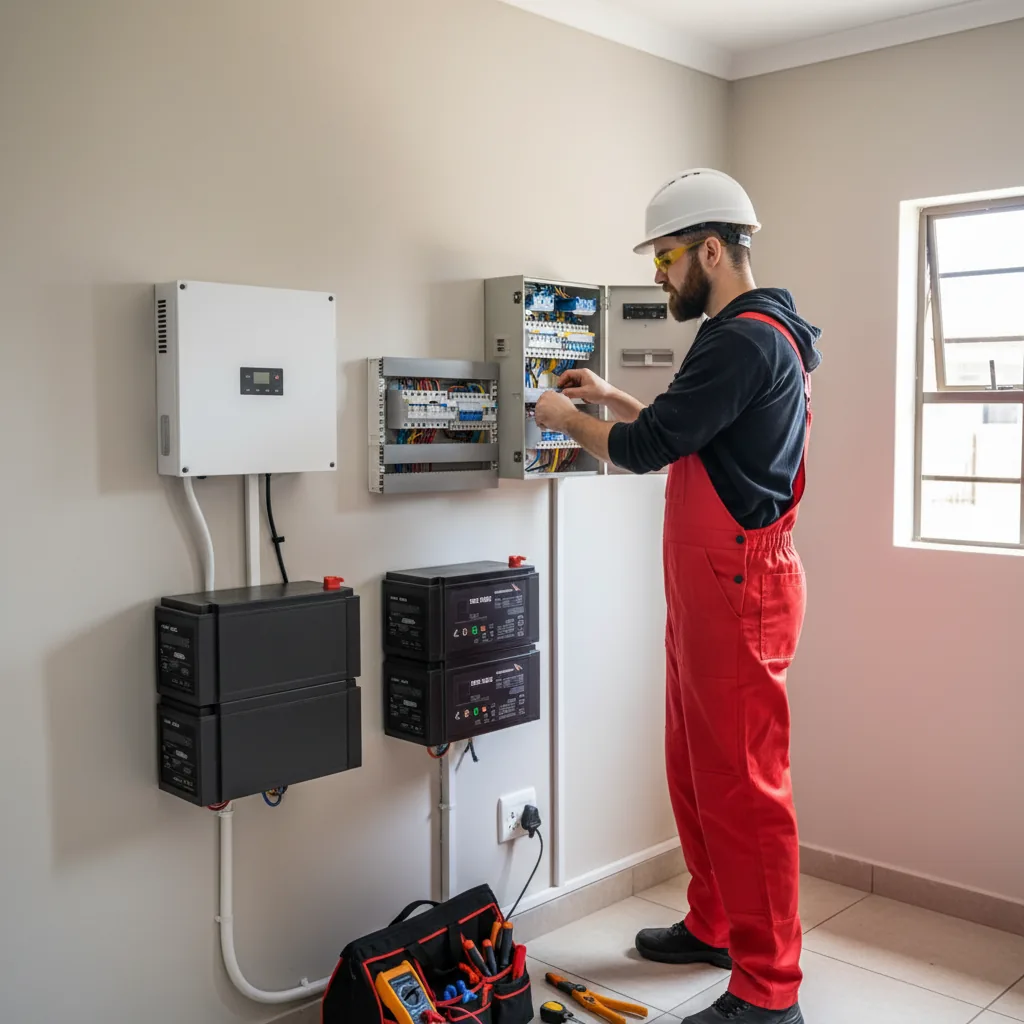
Load Shedding Solutions & Inverters Olympus from 911 Electricians Pretoria, showing a technician connecting an inverter, battery bank and distribution boards.
TRUSTED LOAD SHEDDING SOLUTIONS & INVERTERS IN OLYMPUS

Why Choose Us for Load Shedding Solutions & Inverters Olympus

Runtime estimates make sense only when tied to an agreed load. We explain the assumptions behind the proposal and show which appliances can quickly change battery demand. The electrician checks the selected circuits and commissioning results before handover. This gives the owner a usable operating plan rather than a fixed-duration claim. To compare essential loads with a suitable backup arrangement, consult 911 Electricians Pretoria.

  • Load-based proposal: System advice follows the property's essential loads rather than a copied outage timetable.
  • Existing installation checked: The electrician considers board space, circuit condition and protection before connection.
  • Commissioning evidence: The completed setup receives the checks relevant to its design and supply arrangement.
  • Real-use guidance: The handover explains how additional loads and battery condition affect expected performance.
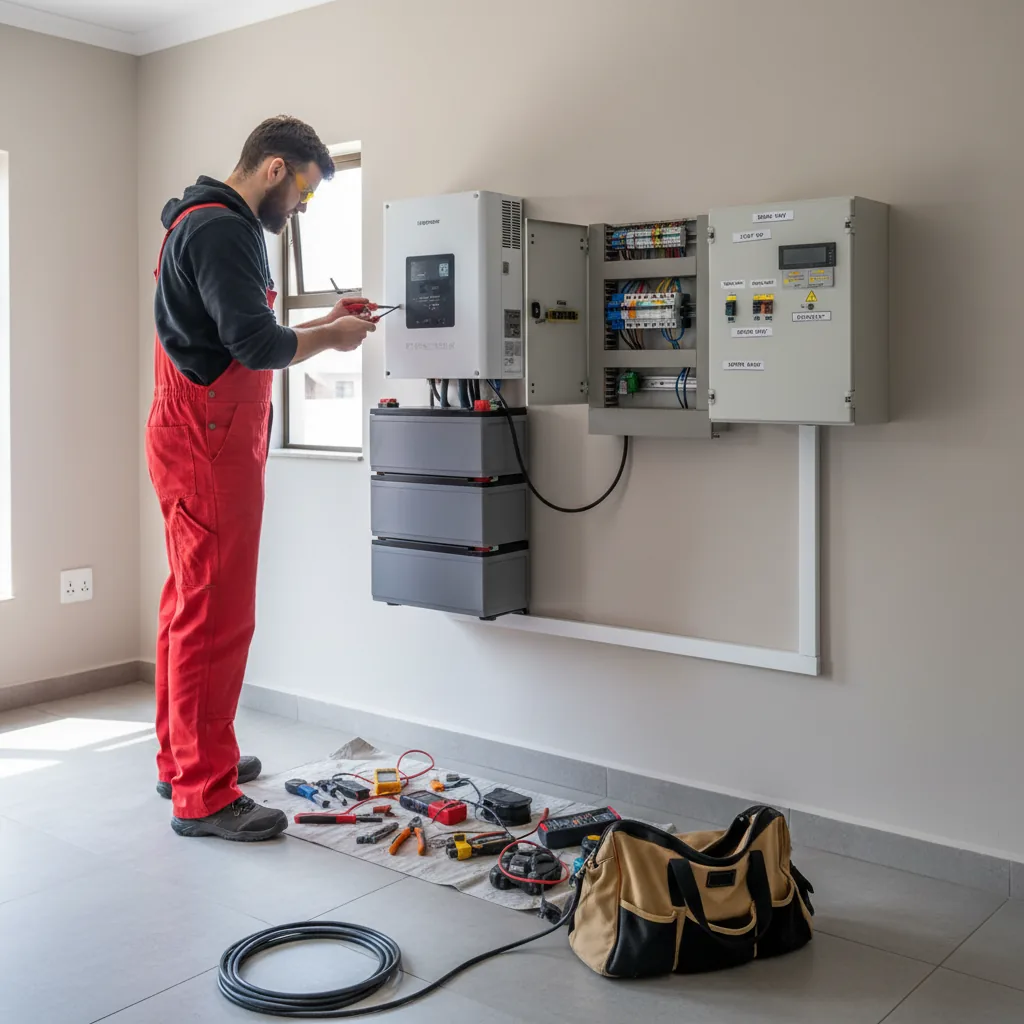
Load Shedding Solutions & Inverters Olympus from 911 Electricians Pretoria, showing a technician testing a wall-mounted inverter and battery backup system.
OLYMPUS LOAD SHEDDING SOLUTIONS & INVERTERS

Why Olympus Residents Trust Us for Load Shedding Solutions & Inverters

An Olympus household may prioritise a fridge, alarm and a few lights. A small business may need security, internet and point-of-sale equipment. Those different priorities change the circuit list and energy budget. A well-planned installation makes the limits visible and gives occupants clear steps for normal operation.

  • Priorities are explicit: The design records which loads need backup and which remain on normal supply only.
  • Safe supply separation: The electrician assesses the changeover arrangement as part of the complete installation.
  • Business needs included: The team can plan selected work circuits without pretending every appliance is essential.
  • Handover supports use: The owner knows how to operate the system and when unusual behaviour needs assessment.
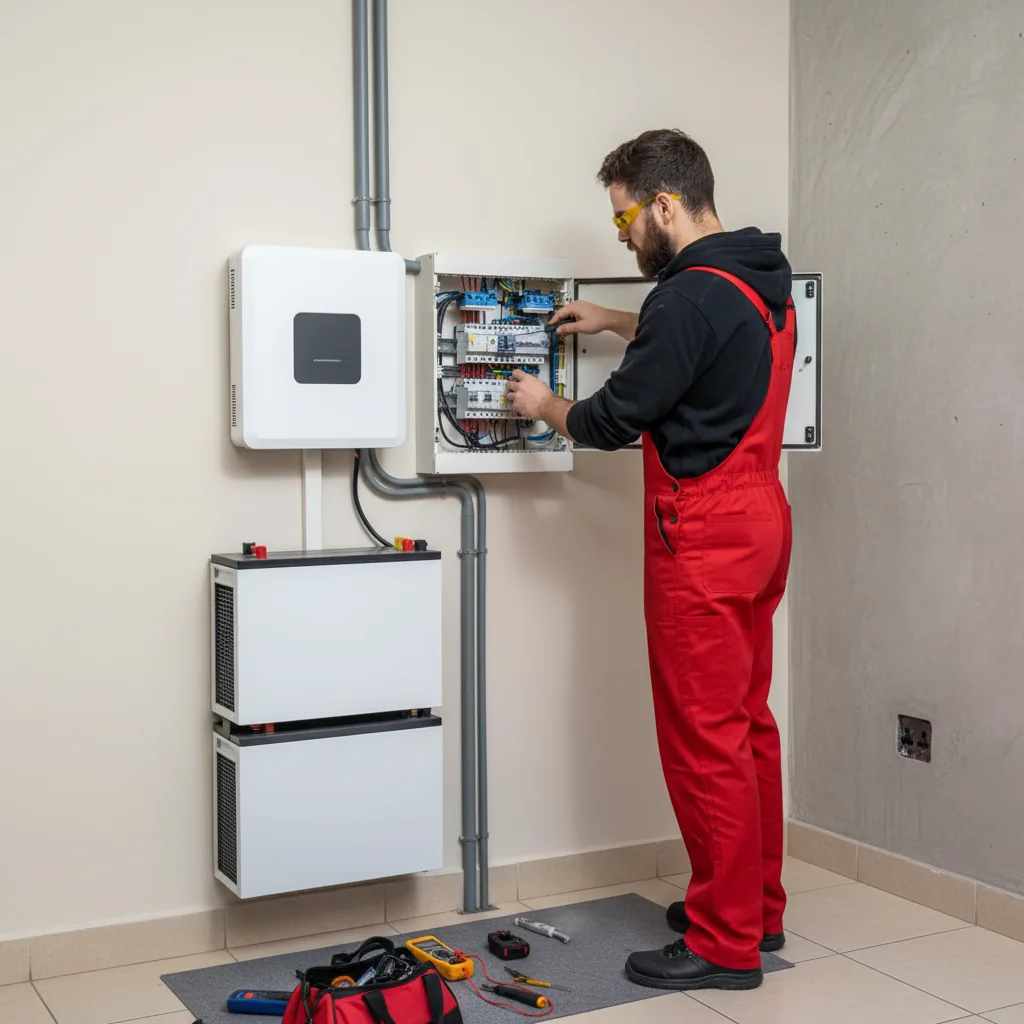
Load Shedding Solutions & Inverters Olympus from 911 Electricians Pretoria, showing a technician checking the distribution board beside an inverter and batteries.

GOT QUESTIONS?

Frequently Asked Questions About Our Load Shedding Solutions & Inverters Olympus Team

Have questions? We’ve got answers. Our Load Shedding Solutions & Inverters Olympus FAQ section covers the most common queries about our services, coverage, insurance, and emergency response so you can book with confidence.

Begin with the essential circuits, the equipment connected to them and the expected duration of use. Capacity should follow that load profile.

Expert insight: The electrician also considers start-up demand, battery type, board arrangement and changeover. A larger rating is not automatically a better fit for the existing installation.

High-demand heating, cooking, water-heating and motor loads may exceed a practical residential backup plan, depending on the designed system.

Expert insight: The proposal should name supported and excluded loads. Occupants then know which appliances can shorten runtime or cause the inverter to reach its operating limit.

It is technically possible for some designs, but the answer depends on total demand, essential priorities, available capacity and budget.

Expert insight: A selective-circuit plan is often easier to understand and manage. The electrician should assess the property before recommending whole-site or partial backup.

Expected runtime depends on the battery's usable capacity, actual connected load, equipment efficiency, battery condition and operating choices.

Expert insight: No one can guarantee a fixed duration without an agreed load profile and clearly stated assumptions. The handover should explain how real usage changes the estimate.

Some fridges, pumps and other equipment draw more power briefly when they start than while they are running.

Expert insight: That short demand can affect inverter selection and which loads may start together. The electrician considers both running consumption and start-up behaviour.

It is a designed method for selecting or separating normal and backup supplies so they do not interact unsafely.

Expert insight: The exact arrangement depends on the installation. The electrician should assess protection, isolation, earthing and the selected circuits as one coordinated design.

Not without assessment. Board space, circuit identification, protection, condition and the existing supply arrangement can affect the installation plan.

Expert insight: The electrician may recommend preparatory board work or a separate backup section. Define that scope before connecting equipment.

Commissioning confirms the agreed connections, operating behaviour, selected circuits and relevant protective arrangements for the completed scope.

Expert insight: The owner should receive an explanation of normal and backup modes, load limits and what to do if the system shows unusual behaviour.

Yes, a design can focus on selected security, connectivity, point-of-sale or lighting circuits where the existing installation supports that arrangement.

Expert insight: The business should rank essential loads and identify equipment that must stay outside backup. The proposal then reflects real operational priorities.

Keep equipment details, warranty information, circuit identification, commissioning records and the operating guidance supplied at handover.

Expert insight: Record changes in runtime, warnings or unusual sounds. Those observations help a technician compare current behaviour with the original setup.

Our Electrician Stories

Load Shedding Solutions & Inverters Electrician Olympus Real Jobs, Real Solutions from 911 Electricians

Here are a few situations where our Load Shedding Solutions & Inverters service may be needed in Olympus 

A Home Office Selects Only Essential Circuits

An Olympus home worker needs the router, a desk light, security and one refrigeration circuit during an outage. Heating appliances can remain off. The electrician can review these priorities, the board and expected demand before recommending inverter and battery capacity. The handover explains how adding loads reduces available runtime. Practical Tip: Write down the essential equipment and its normal use before discussing system size.

A Small Shop Protects Connectivity and Point-of-Sale

A small business wants security, internet connectivity and selected point-of-sale equipment on backup. General plug circuits and high-demand appliances do not all need support. The electrician can define a dedicated load profile, assess safe changeover and explain the operating limits to staff. Practical Tip: Separate business-critical equipment from convenient but nonessential loads.

An Existing System Runs for Less Time Than Expected

A household notices that backup time changes from one outage to another. Occupants may have connected more appliances, while battery condition and operating choices can also change. An electrician can review the actual load, system settings, battery information and relevant connections before recommending a correction or revised usage plan. Practical Tip: Compare runtime against a known load instead of the clock alone.

Board Space Affects the Installation Plan

An owner has chosen essential circuits but the existing distribution board has limited spare space. The electrician assesses protection, isolation and changeover before ordering equipment. The final proposal may include board work so the installer can integrate the backup supply safely and clearly. Practical Tip: Let the electrician review the board before committing to a packaged system.

Occupants Need a Clear Changeover Handover

Several people use an Olympus property and are unsure which circuits remain live during an outage. After commissioning, the electrician identifies the backed-up circuits and explains normal and backup operation. Everyone knows which heavy loads stay off and which warning signs require a service call. Practical Tip: Keep the backed-up circuit list with the system operating guidance.