Load Shedding Solutions & Inverters Menlo Park

On Call 24/7 - Licensed Electrician Near You

Power interruptions can stop lighting, connectivity, security equipment, and essential business systems. Load Shedding Solutions & Inverters in Menlo Park should begin with the loads that matter and the runtime you expect. Therefore, 911 Electricians Pretoria reviews the existing board, demand, changeover needs, protection, and proposed equipment before defining an installation scope. Call 076 895 5655 to discuss your priorities and confirm current availability.

Get your FREE

Quote Today

SERVICE DESCRIPTION

About Our Load Shedding Solutions & Inverters Services Menlo Park

Backup planning starts with the equipment you need and the period you want it supported. First, we separate essential circuits from high-demand loads. Next, running demand and start-up behaviour are compared with inverter output and usable battery capacity. The existing distribution board and proposed cable route also shape the design. By consulting 911 Electricians Pretoria in Menlo Park, you receive a plan that states backed-up circuits, excluded loads, expected limits, and the assumptions behind any runtime estimate. electrician services in Menlo Park

  • Essential-load list: Lighting, security, connectivity, and selected plugs are prioritised before equipment is sized.
  • Start-up demand: Motor and compressor start-up behaviour forms part of the load assessment.
  • Existing board: The plan considers board condition, circuit separation, protection, and available installation space.
  • Runtime assumptions: Expected runtime reflects usable storage, agreed loads, equipment settings, and operating conditions.
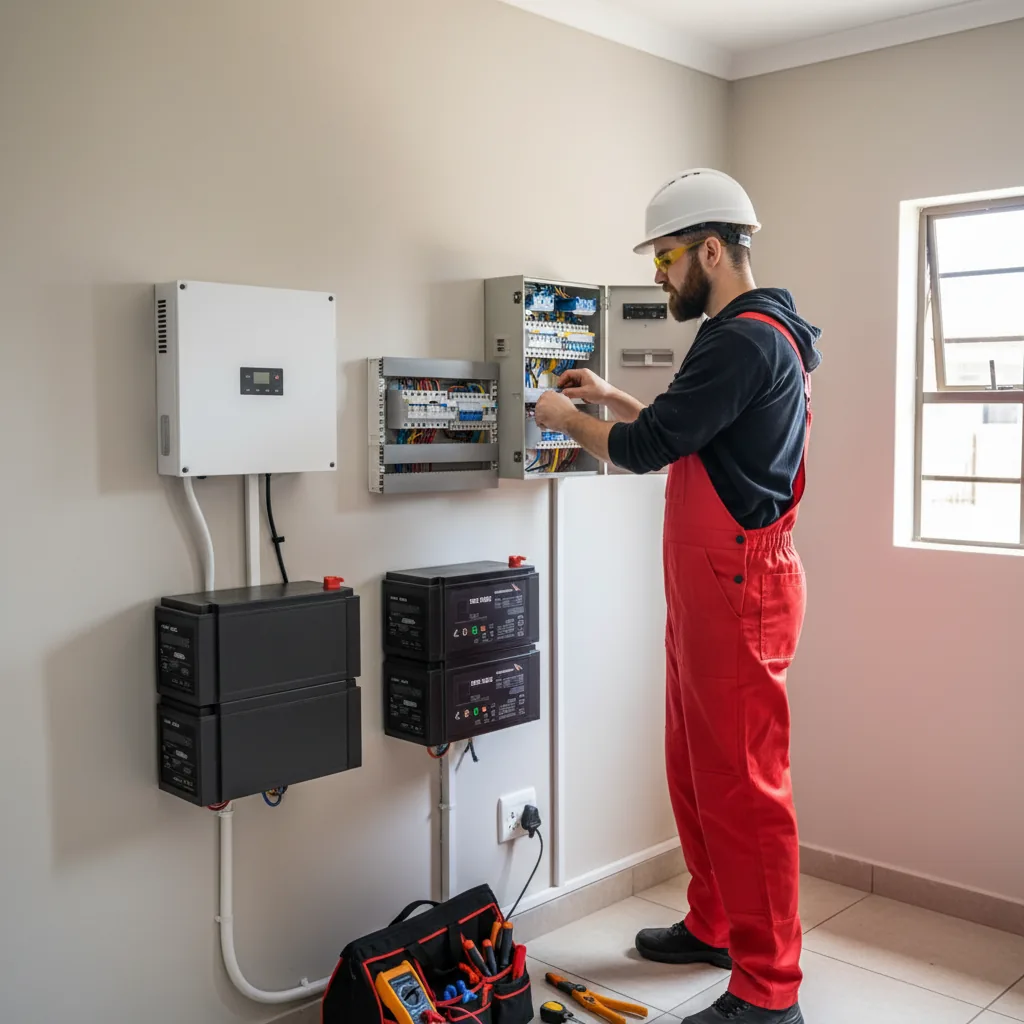
Load Shedding Solutions & Inverters Menlo Park from 911 Electricians Pretoria, showing a technician connecting an inverter, battery bank and distribution boards.
TRUSTED LOAD SHEDDING SOLUTIONS & INVERTERS IN MENLO PARK

Why Choose Us for Load Shedding Solutions & Inverters Menlo Park

A larger inverter or battery does not automatically create a better backup system. Instead, the design should match the agreed loads, changeover behaviour, placement, protection, earthing, and budget. We compare those requirements with the equipment instructions and the existing installation. 911 Electricians Pretoria services in Menlo Park keeps the discussion tied to one practical scope. As a result, the proposal can explain what the system should support, which loads stay off, and what commissioning still needs to verify. 911 Electricians Pretoria

  • Realistic capacity: The proposal links inverter output and usable battery capacity to the agreed essential loads.
  • Suitable placement: Manufacturer clearances, ventilation, access, temperature, dust, and moisture guide the selected position.
  • Controlled changeover: The design keeps grid and backup sources within the selected changeover arrangement.
  • Earthing checks: Commissioning confirms relevant neutral, earthing, and protective-device behaviour in each operating mode.
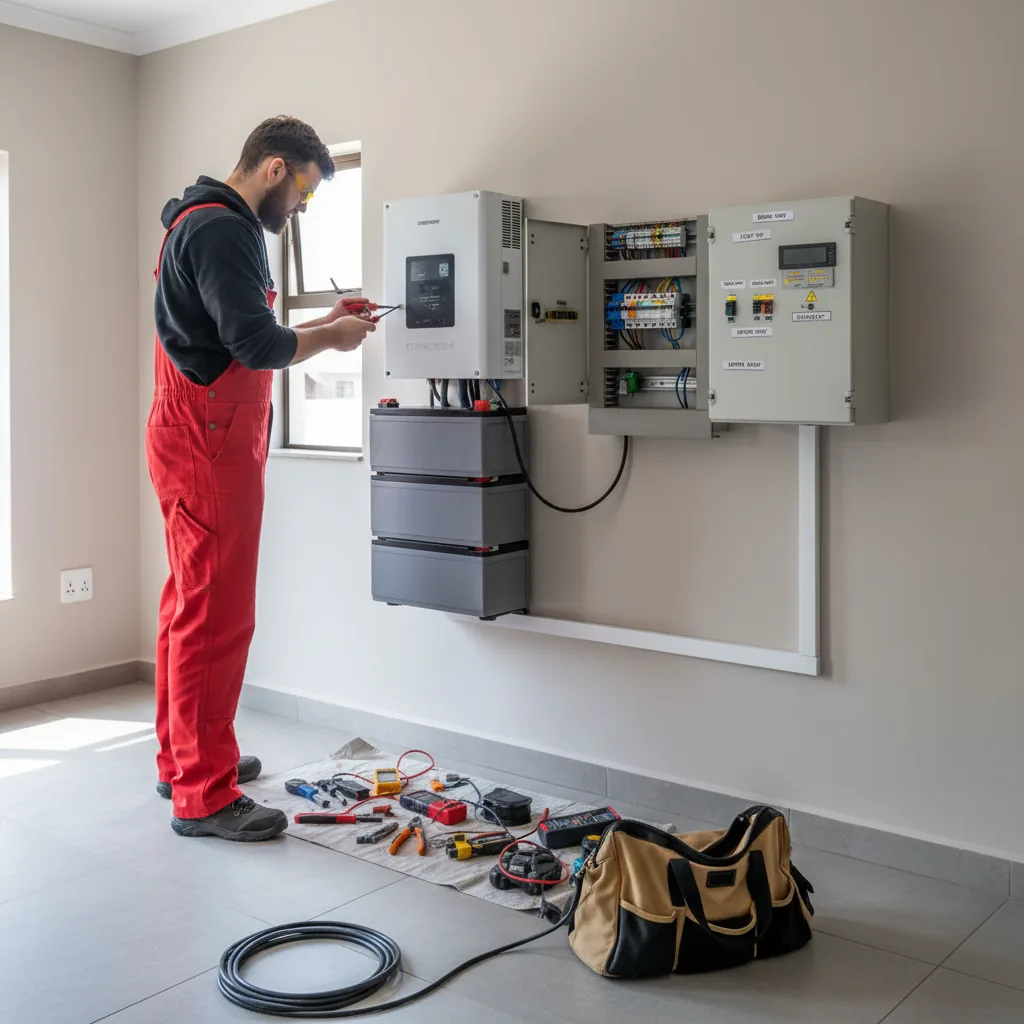
Load Shedding Solutions & Inverters Menlo Park from 911 Electricians Pretoria, showing a technician testing a wall-mounted inverter and battery backup system.
MENLO PARK LOAD SHEDDING SOLUTIONS & INVERTERS

Why Menlo Park Residents Trust Us for Load Shedding Solutions & Inverters

After installation, commissioning checks the selected circuits, changeover response, protection, and operation under an appropriate agreed load. However, the test does not promise a particular runtime under every future condition. We explain the system's operating limits, warning indicators, and excluded loads. You also learn how battery state and power demand affect daily choices during an outage. Finally, the handover identifies any item that remains outside the installation scope or needs separate attention.

  • Selected circuits: The backed-up points are checked against the agreed essential-load plan.
  • Changeover response: Commissioning records how the installed arrangement behaves between grid and backup modes.
  • Warning indicators: The handover explains system alerts and the action appropriate to each documented state.
  • Operating limits: You receive guidance on excluded loads, battery state, and avoiding unnecessary overloads.
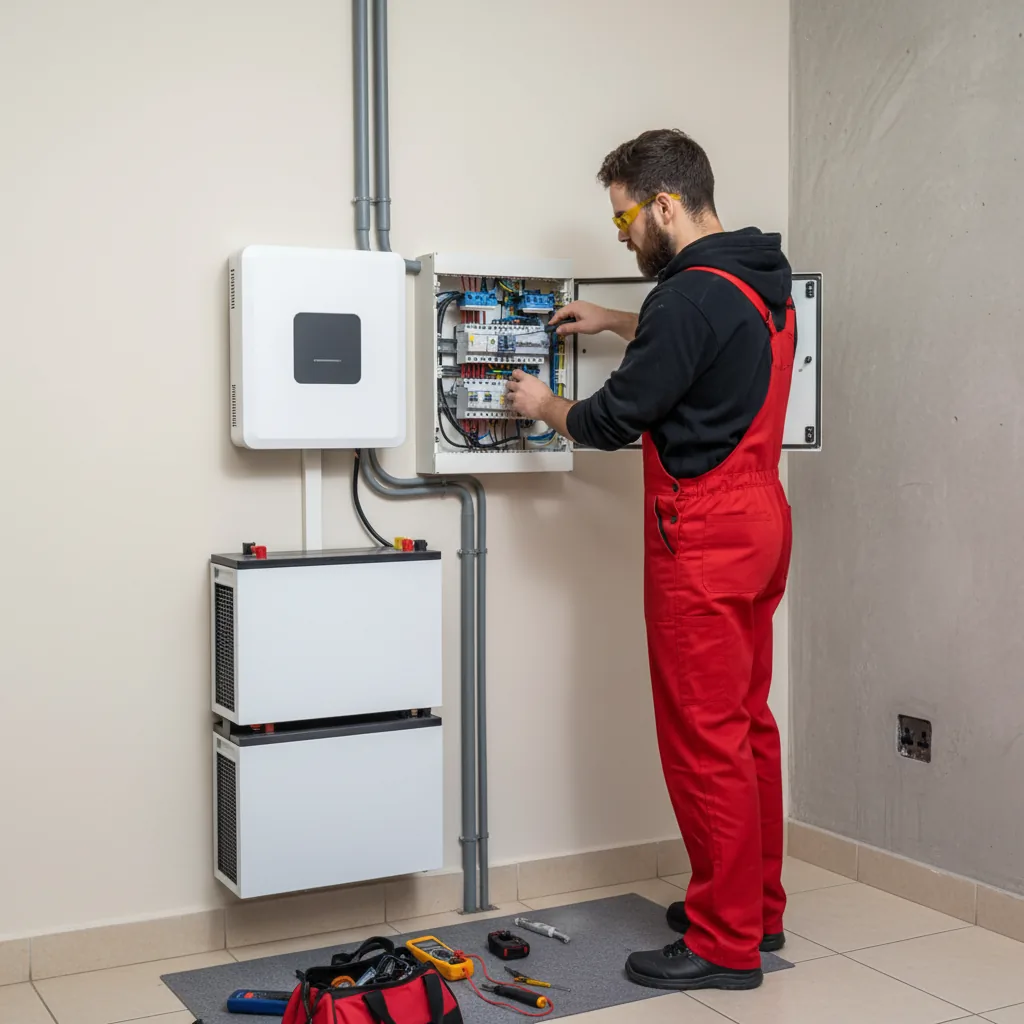
Load Shedding Solutions & Inverters Menlo Park from 911 Electricians Pretoria, showing a technician checking the distribution board beside an inverter and batteries.

GOT QUESTIONS?

Frequently Asked Questions About Our Load Shedding Solutions & Inverters Menlo Park Team

Have questions? We’ve got answers. Our Load Shedding Solutions & Inverters Menlo Park FAQ section covers the most common queries about our services, coverage, insurance, and emergency response so you can book with confidence.

This usually happens because the connected appliances draw more power than the inverter can supply. Start-up loads from fridges, pumps, or kettles often exceed the system's peak capacity, causing an immediate safety shutdown.

Expert insight: An electrician can measure your actual power demand and help you isolate non-essential circuits. That plan keeps non-essential circuits outside the backup scope and reduces avoidable overload risk.

Standard home inverters are generally not designed to run high-draw heating appliances like geysers. Doing so will rapidly deplete your batteries and can easily overload the inverter's power capacity.

Expert insight: It is safer and more efficient to keep geysers on grid power or transition them to solar thermal systems. This preserves your battery backup for essential electronics and lighting.

The runtime depends entirely on your battery capacity and the total wattage of connected appliances. A larger battery bank running only lights and routers will last much longer than a small battery running multiple appliances.

Expert insight: We can help you calculate your average power consumption to size a battery bank correctly. The estimate shows how the proposed battery may perform under the agreed loads and assumptions.

A manual changeover requires deliberate user operation, while an automatic arrangement changes source without that step. However, actual changeover behaviour depends on the installed equipment, system design, and settings.

Expert insight: The choice should reflect essential loads, acceptable interruption, operating simplicity, protection, and budget. Commissioning must therefore confirm how the selected arrangement behaves in both grid and backup modes.

When an inverter disconnects your home from the grid, it must establish a safe local earth path. Without proper earthing, safety devices like RCDs may not trip during an electrical fault, creating shock hazards.

Expert insight: The installation design and commissioning tests must confirm the required neutral and earthing behaviour in backup mode. A shock sensation needs isolation and fault investigation, not an assumed earthing repair.

Mixing different battery types, capacities, or ages is highly discouraged as it causes uneven charging. The older or weaker battery will degrade the newer one, significantly reducing the overall lifespan of your system.

Expert insight: Always use identical batteries from the same manufacturer and production batch when expanding your system. An electrician can advise you on the safest way to upgrade your storage capacity.

Inverters and batteries should be installed in a cool, dry, and well-ventilated area. Avoid tight cupboards, direct sunlight, or damp locations, as high temperatures and moisture will damage the electronic components.

Expert insight: Keeping the equipment in a dedicated utility room or garage is usually ideal. The selected position should meet the manufacturer's ventilation, clearance, access, and environmental requirements. It must also remain accessible for inspection and maintenance.

Most inverters will emit a continuous warning beep or display an overload error code on the screen. If the load is not reduced immediately, the system will shut down to protect itself.

Expert insight: You can prevent this by turning off high-power appliances before the backup system takes over. An electrician can also install dedicated backup circuits to automate this process safely.

Lithium and lead-acid batteries differ in usable depth of discharge, cycle behaviour, temperature limits, maintenance, and cost. Published cycle figures also depend on the manufacturer and operating conditions.

Expert insight: Compare warranty terms, usable capacity, compatible charging settings, expected load, replacement cost, and installation requirements. Therefore, no battery chemistry is automatically the best choice for every backup system.

Yes, Menlo Park is included in the City of Tshwane's load-shedding schedules, often designated as area 6. The timing and duration of outages depend on the active stage announced by the municipality.

Expert insight: A correctly sized system can support agreed essential loads for a planned period. Contact us to compare realistic capacity, runtime, protection, and changeover options. The estimate should state which appliances are excluded.

Our Electrician Stories

Load Shedding Solutions & Inverters Electrician Menlo Park Real Jobs, Real Solutions from 911 Electricians

Here are a few situations where our Load Shedding Solutions & Inverters service may be needed in Menlo Park 

Choosing Essential Backup Loads for a Home

A Menlo Park household wants backup for lighting, security, internet access, and selected plugs. The property location does not reveal the age or capacity of its electrical system. An electrician lists the real priorities and compares running and start-up demand with the existing board. The design then separates backed-up circuits from loads that must stay off. Runtime remains an estimate based on usable battery capacity, equipment settings, and actual consumption. Practical Tip: Write down the equipment you truly need during an outage, including motor start-up loads, before choosing inverter capacity.

Planning Power Continuity for Office Equipment

A Menlo Park office wants computers, networking equipment, and security systems to remain available during outages. Before selecting an inverter, the design compares each load, acceptable interruption, equipment power-quality needs, and existing protection. A particular inverter type is not assumed from the office label alone. Where continuity matters, the proposal should explain changeover behaviour, backed-up circuits, expected runtime, excluded equipment, and the limits that commissioning must verify. Practical Tip: List equipment that cannot tolerate an interruption and confirm its power requirements before comparing changeover and inverter options.

Estimating Battery Runtime for Longer Outages

A Menlo Park household finds that backup runtime is shorter than expected. High load, battery settings, temperature, battery condition, or the original estimate may influence the result. An electrician reviews the actual connected loads and available system data before recommending expansion. Additional batteries are not automatically the answer. The revised estimate should state usable capacity, expected demand, excluded appliances, and the assumptions that may change real-world runtime. Practical Tip: Compare actual load and usable battery capacity before adding storage; a larger bank cannot correct an overloaded inverter.

Verifying Earthing and Neutral Behaviour

A Menlo Park inverter system needs protective devices to behave correctly in both grid and backup modes. The required neutral and earthing arrangement depends on the equipment and installed changeover design. Nobody should infer a missing bond from a symptom alone. Inspection and commissioning tests confirm how the relevant paths and protection operate in each mode. Any shock sensation from metal equipment requires immediate isolation and separate fault investigation. Practical Tip: Stop using equipment that gives a shock sensation and arrange testing of the inverter, changeover, earthing, and affected circuit.

Selecting a Suitable Inverter Location

A Menlo Park owner is considering a utility room, garage, or another service area for an inverter and battery system. The preferred position depends on manufacturer instructions, ventilation, clearances, access, dust, moisture, temperature, and the battery type. A cupboard or garage is not automatically suitable. The installation plan should also account for cable routing, protection, maintenance access, and environmental limits before equipment is fixed in place. Practical Tip: Check the manufacturer's clearance and environmental requirements before choosing a location, and keep the equipment accessible for inspection.